
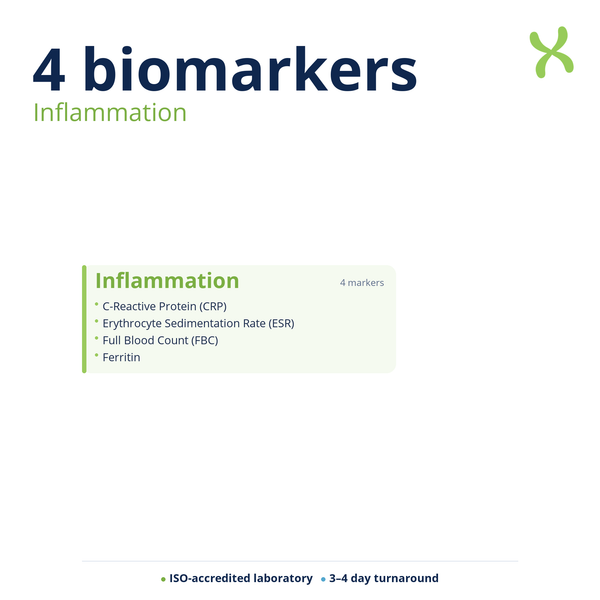

Inflammation
Detect key inflammatory responses through comprehensive biomarker analysis. This test measures cr...
£120.00
View
Understand the root of your symptoms and take control of your long‑term wellbeing. Our Inflammation & Rheumatology collection is designed to help you uncover what’s happening beneath the surface when you’re expe...
Understand the root of your symptoms and take control of your long‑term wellbeing.
Our Inflammation & Rheumatology collection is designed to help you uncover what’s happening beneath the surface when you’re experiencing pain, stiffness, fatigue, or unexplained inflammation. These tests offer valuable insights into the body’s immune activity and inflammatory responses—key factors in conditions affecting the joints, muscles, connective tissues, and overall mobility.
Whether you're monitoring ongoing symptoms, exploring potential autoimmune or inflammatory issues, or simply seeking clarity around persistent discomfort, these screens provide meaningful data to support your health journey.
Each test delivers clear, easy‑to‑interpret results that help you:
Because when you can see the signals your body is sending, you’re better equipped to act, adapt, and feel your best.
4 Products
Detect key inflammatory responses through comprehensive biomarker analysis. This test measures cr...
The Rheumatology Extended panel advances beyond standard rheumatology screening by incorporating ...
Rheumatology is a clinical discipline dedicated to the diagnosis and management of conditions aff...
Optimal musculoskeletal function depends on a multifaceted approach combining physical activity, ...
Understanding your body's biomarkers is the foundation of proactive health. When you track key metrics — from blood chemistry to sleep cycles and hormone levels — you gain the insight to make decisions that drive real, lasting change.
Biomarkers can reveal imbalances months — even years — before symptoms appear, giving you time to act before a small issue becomes a serious one.
Replace guesswork with precision. When you know your baseline, you can measure the real impact of supplements, sleep, exercise, and nutrition.
No two bodies are the same. Monitoring your biomarkers means your health protocol is built around your unique biology — not generic advice.
Maintaining healthy ranges across key metrics is the single most evidence-backed strategy for extending healthspan and supporting long-term health.
Biomarkers are measurable indicators of your body's biological processes — from blood glucose and hormone levels to sleep architecture and inflammatory markers. They are the language your body uses to communicate its true state of health.
The body keeps score — make sure you're keeping track.
All blood samples are analysed in our ISO-accredited lab, ensuring the highest standards of accuracy and reliability for every result.
Your biomarker readings are delivered in a detailed report with clear reference ranges, so you understand exactly where you stand.
Every test is overseen by experienced specialists. If a result requires further investigation, it will be flagged for onward referral.
Results are delivered securely to your email as a detailed PDF. Your biomarker data stays private and under your control at all times.
chXhealth® is a biomarker and genetic data provider. We do not diagnose, treat or prescribe. Our services are informational and support your health and wellness journey.
Your biology is not fixed. With the right data and the right tools, meaningful change is within reach. Start your optimisation journey now.


